Olympic National Forest
Dr. DeathOlympic National Forest is the remote setting where Marissa Bonpaine was found murdered; its dense conifers, forest-floor debris, and persistent rain shaped both the scene and the difficulty of investigating it.
Setting and Discovery
Last seen serving shrimp cocktail at a stand in Seattle’s Pike Place Market, twenty-year-old waitress Marissa Bonpaine was found a week later in a remote part of Olympic National Forest, splayed in front of a fir. A hiker discovered her body. The surrounding floor, layered with pine needles and decaying leaves, might ordinarily have preserved forensic traces, but investigators found no footprints. Eleven days of rain had further washed the scene, leaving it as clean as the operating room the killer had intended it to be. The forest’s isolation offered concealment, while its weather and ground cover complicated the effort to recover evidence.
The Forest as an Evidence Field
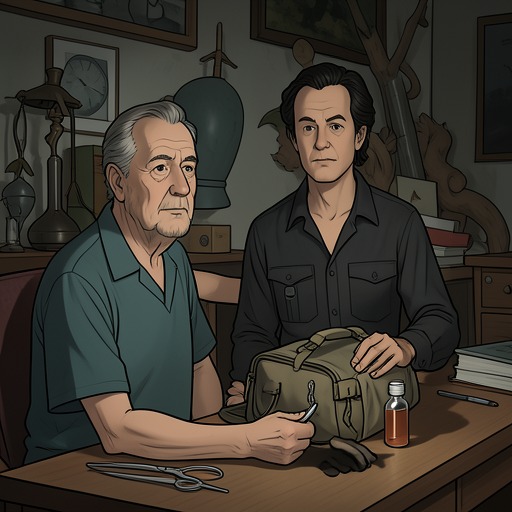
A two-hundred-yard grid search by forest rangers and law-enforcement personnel from three departments yielded 183 items, mostly discarded cans, bottles, clothing, and other debris. Among them was a small object that caught the light against the forest floor: a child’s Tommi-Toy hypodermic, originally part of a U-Be-the-Doctor kit. It lay 1.4 meters from Marissa Bonpaine’s left hand. Investigators recorded no fingerprints or organic residue; the rain might have washed away residue, but the surviving record gives no indication that anyone considered the toy’s significance. In this remote forest, the search recovered an abundance of objects yet left an apparently inconspicuous medical toy unexamined—a detail that would make the landscape’s scatter of debris part of the case’s clue pattern.
Staging and Investigative Significance
The forest’s trees were more than concealment: they formed a recurring element in the killer’s apparent method. Marissa Bonpaine was found in front of a fir, and four Washington State victims from the period when Michael Burke was a medical student had likewise been left propped against or near trees. Leimert Fusco considered those cases consistent with Burke’s technique. The setting therefore connected an isolated murder scene to a wider pattern, turning the forest’s vegetation into a point of comparison across otherwise separate investigations.
The scene also carried signs of deliberate control. Marissa Bonpaine had suffered a slashed throat, abdominal mutilations, and sexual posturing; a deep, roughly trapezoidal wound above the pubic bone added a geometric feature to the violence. She had no blunt-force head wound. Her small stature, together with the seclusion of the location, led Alex Delaware to consider that the killer may have wanted her conscious and had taken time with the attack. Against that brutality, the toy hypodermic found beside her hand was a modest, easily overlooked trace. Its presence in the forest linked the physical scene to a medical image, while the rain and the sheer volume of ordinary debris help explain how such a distinctive object could remain unrecognized in the original investigation.
The Forest Reconstructed Through the Case File
The forest’s significance emerges not only at the crime scene but through Alex Delaware’s later examination of the record. At 3:22 a.m. on Thursday, after finishing Leimert Fusco’s omnibus and reviewing the photographs a second time, he noticed the glint near Marissa Bonpaine’s hand and traced it to the inventory entry for the toy hypodermic. The delayed recognition makes the forest a place reconstructed through accumulated evidence: its scattered debris had been catalogued, but the small object acquired meaning only when a new reader connected it to the wider pattern.